
Introduction
Developmental trauma, defined as repeated exposure to early-life adversity such as abuse, neglect, or household dysfunction, creates long-term neurophysiological and psychological consequences. The landmark Adverse Childhood Experiences (ACE) study conducted by Felitti et al. (1998) at Kaiser Permanente demonstrated a dose-response relationship between early adversity and later-life health outcomes. Adults with four or more ACEs face dramatically higher risks of depression, substance use, suicide attempts, and chronic disease. Almost two-thirds of adults in the United States report at least one ACE, while one in six report four or more (Felitti et al., 1998).
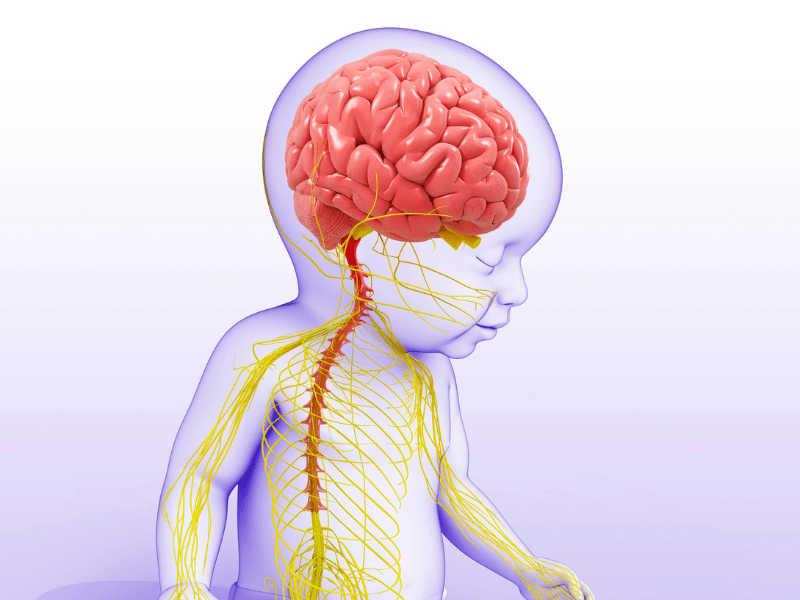
Traditional treatments for trauma, primarily top-down therapies such as cognitive-behavioral therapy, do not address all five levels of the brain impacted by developmental trauma (medulla, pons, diencephalon, limbic system, cortex). When the brainstem and limbic system remain dysregulated, the cortex cannot fully engage in reflective, narrative work (Perry, 2009; Porges, 2011; van der Kolk, 2014). Trauma is not simply remembered cognitively but embedded physiologically in the nervous system (Maté, 2022; Levine, 2010). This makes bottom-up, sequential approaches essential.
Dr. Kimberly Dunkin’s (2024) doctoral project provides one such applied framework (NT^2). Drawing from Perry’s Neurosequential Model of Therapeutics (NMT), Porges’ Polyvagal Theory (PVT), Siegel’s Interpersonal Neurobiology (IPNB), van der Kolk’s emphasis on body-based treatment, Maté’s framing of trauma in health and meaning, and Levine’s Somatic Experiencing, Dunkin (2024) outlines a neurophysiological protocol for repairing developmental trauma by addressing deficits at each level of the brain in sequential order.
Level 1: Medulla (Brainstem Foundations)
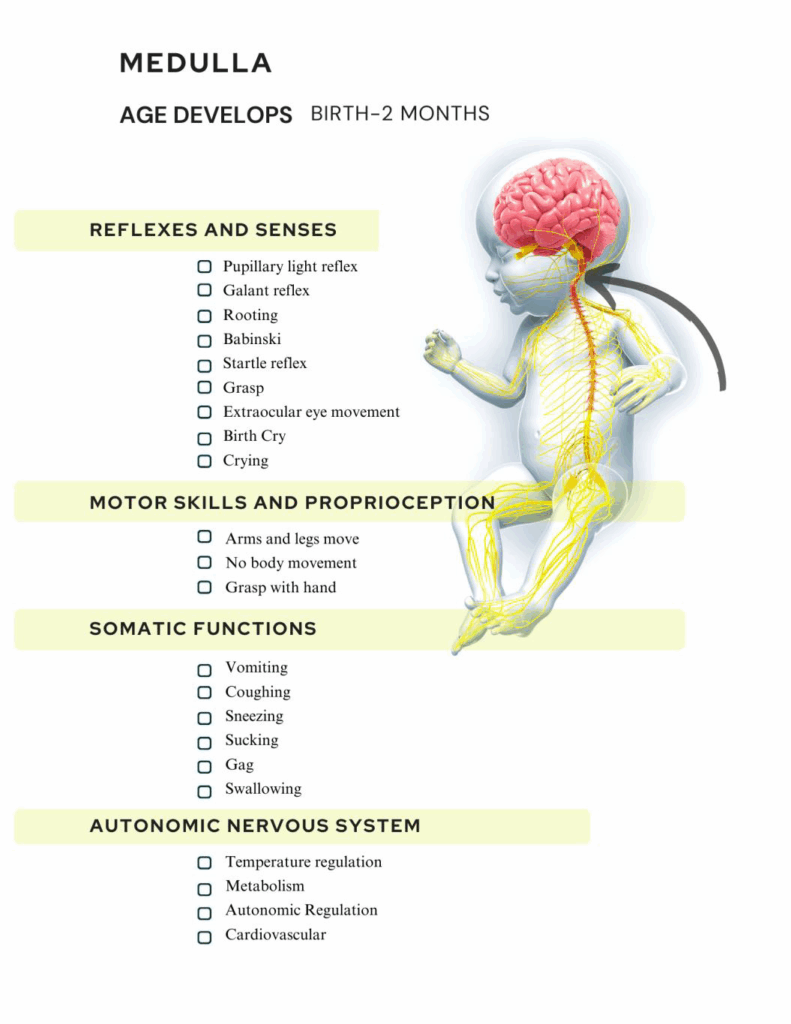
Figure 1. Level 1: Medulla illustration
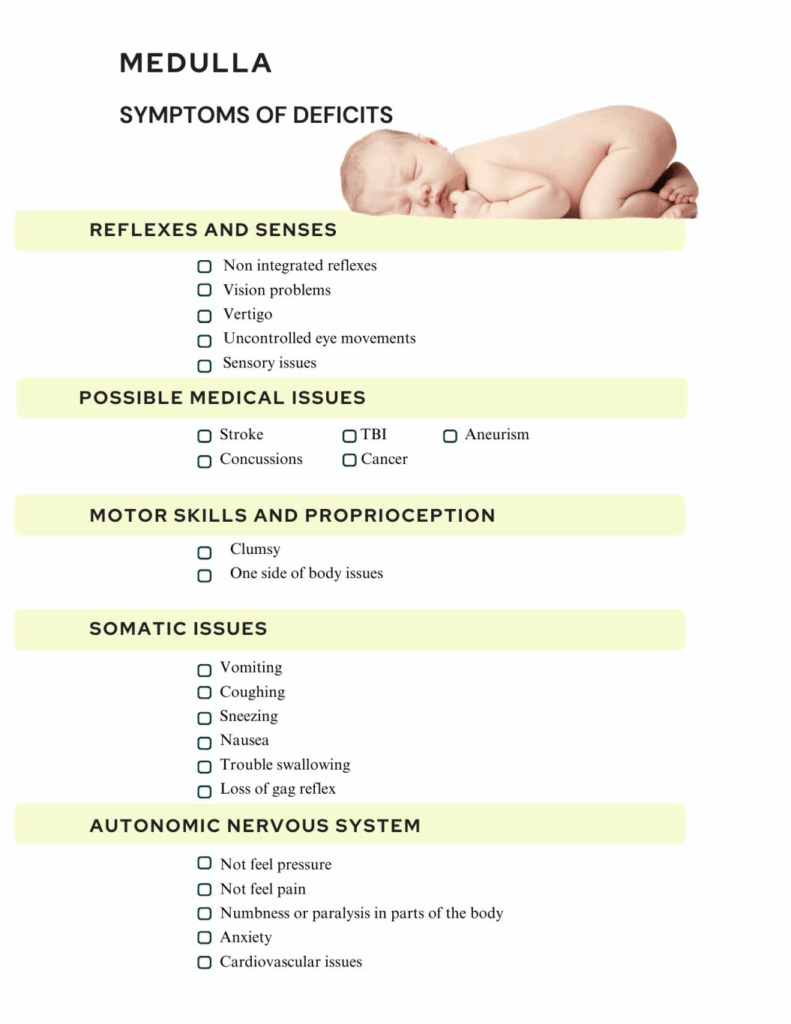
Figure 2. Level 1: Medulla illustration
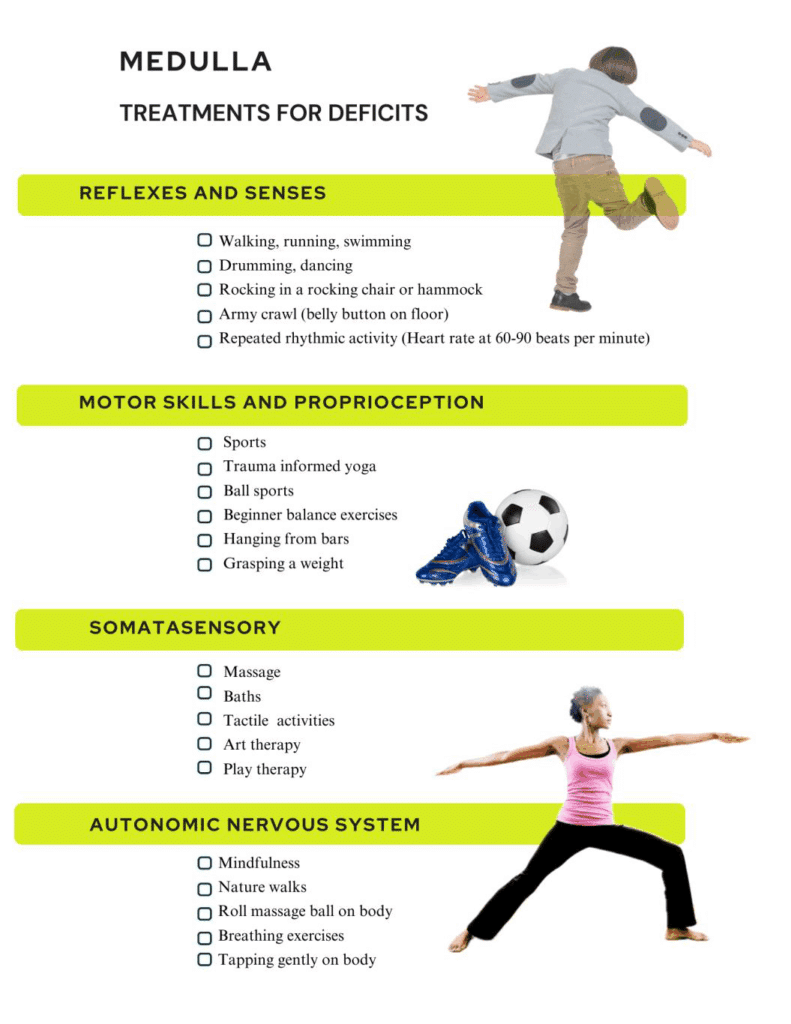
Figure 3. Level 1: Medulla illustration
Symptoms and Deficits
Developmental trauma can impair medullary regulation, leading to irregular respiration, unstable heart rate and blood pressure, sleep disruption, gastrointestinal dysregulation, vestibular and balance problems, exaggerated or blunted startle reflexes, sensory processing issues, chronic fatigue, and even functional neurological symptoms such as fainting or seizure-like activity (Perry, 2009; Porges, 2011; van der Kolk, 2014; Maté, 2022; Dunkin, 2024).
Interventions and Treatments
Interventions at this level emphasize rhythmic, patterned, and somatosensory input. Effective practices include rocking, drumming, steady walking, swinging, balance exercises, massage, weighted blankets, diaphragmatic breathing, chanting, warm baths, grounding in nature, and group-based rhythm such as drumming circles. These activities restore autonomic regulation and re-establish cues of safety (Perry, 2009; Porges, 2011; Levine, 2010; Maté, 2022; Dunkin, 2024).
Framework Notes
Porges (2011) emphasizes that ventral vagal activation is required before higher systems engage. Perry (2009) highlights repetition and rhythm as essential for reorganizing brainstem circuits. Levine (2010) notes that completing defensive responses restores regulation. Van der Kolk (2014) emphasizes body-based release of trauma, while Dunkin (2024) provides structured sequencing of these interventions (NT^2).
Level 2: Pons (Sensorimotor Regulation)
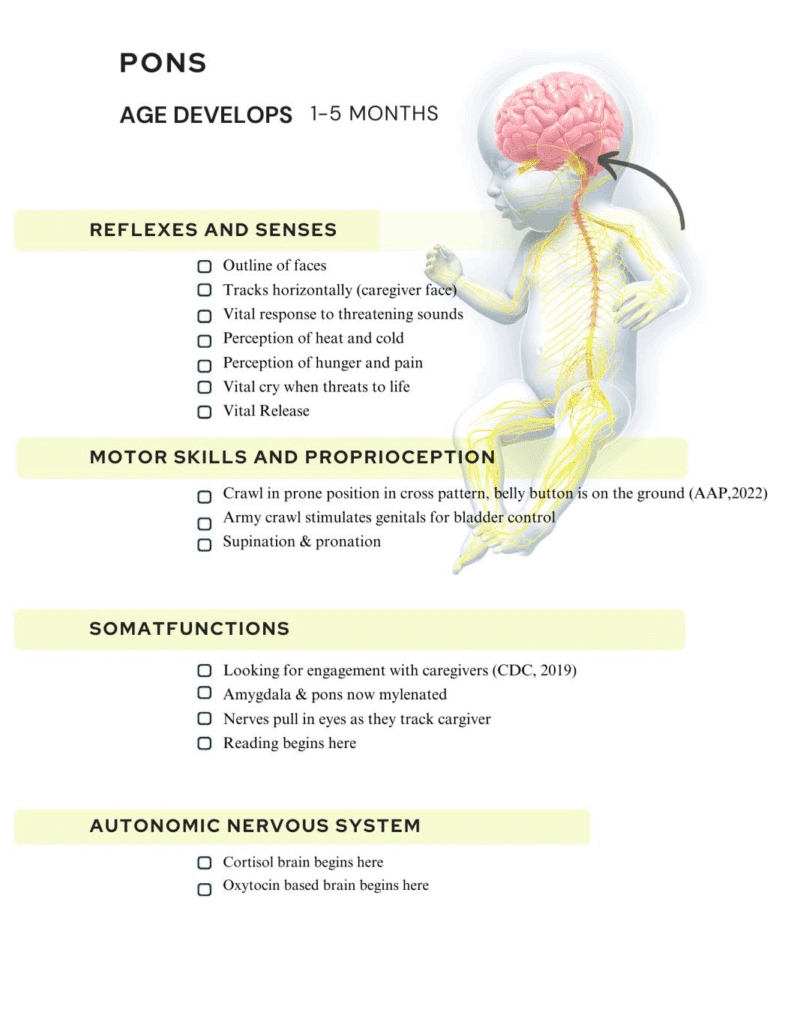
Figure 4. Level 2: Pons illustration
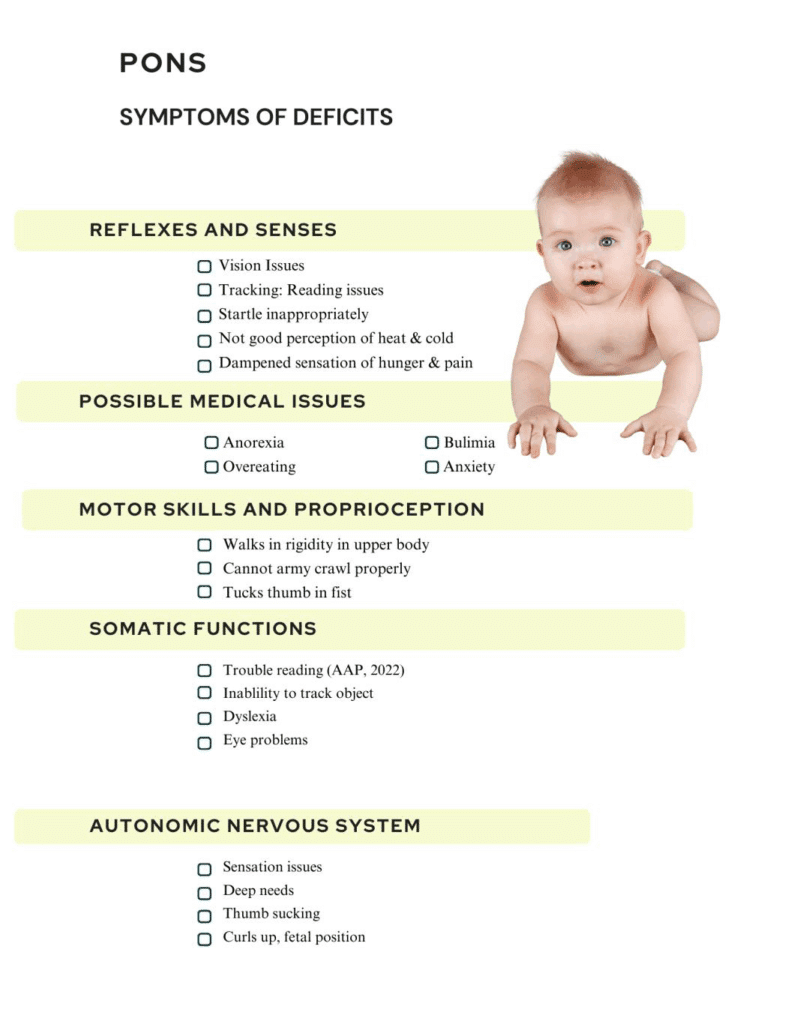
Figure 5. Level 2: Pons illustration
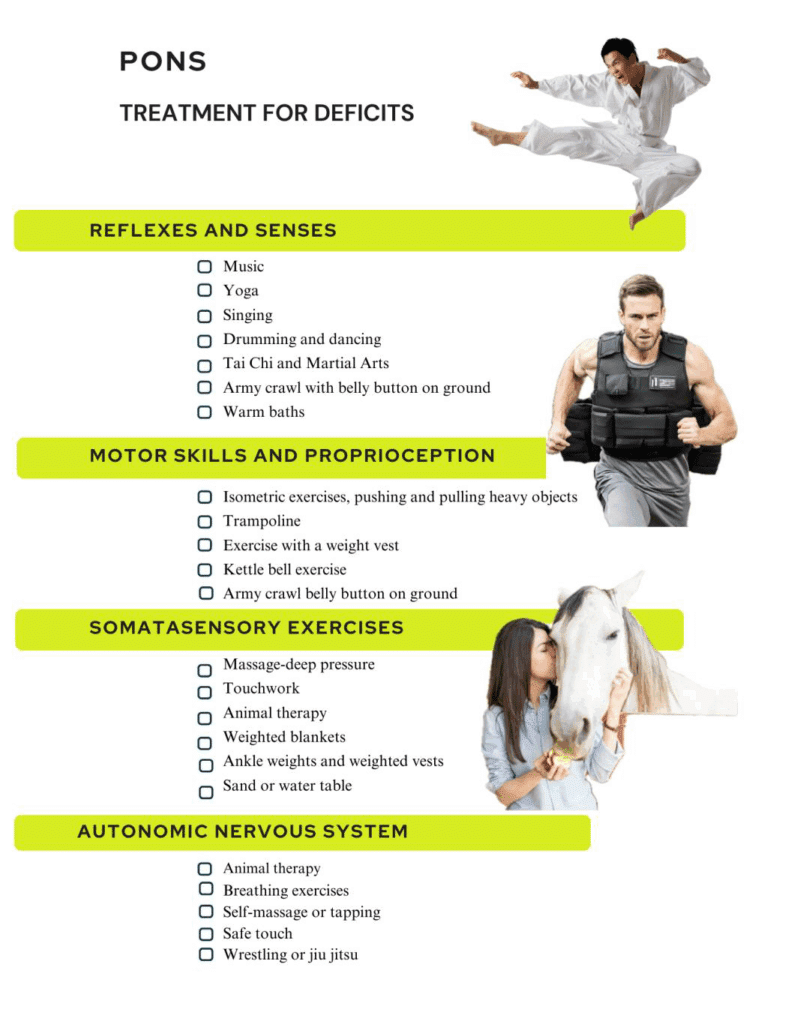
Figure 6. Level 2: Pons illustration
Symptoms and Deficits
Deficits at the pons level include disrupted REM/NREM cycling, nightmares, exaggerated startle, retained primitive reflexes, motor coordination difficulties, postural rigidity, visual tracking challenges, auditory hypersensitivity or delays, proprioceptive difficulties, fine motor delays, and chronic restlessness or fidgeting (Perry, 2009; Porges, 2011; van der Kolk, 2014; Dunkin, 2024).
Interventions and Treatments
Treatments involve structured daily routines, proprioceptive ‘heavy work’ such as pushing, pulling, and lifting, primitive reflex integration through crawling and rolling, balance and vestibular training with yoga or trampolines, music-movement pairings, sensory re-regulation activities such as water play, martial arts or tai chi, deep pressure therapies, and mindful movement practices including yoga and tai chi. These restore sensorimotor stability and regulation (Perry, 2009; van der Kolk, 2014; Siegel, 2012; Dunkin, 2024).
Framework Notes
Perry (2009) stresses that rhythm and patterned movement are foundational for regulation. Porges (2011) highlights that safe sensory input reduces autonomic defense. Siegel (2012) notes that mindful awareness broadens tolerance for integration. Van der Kolk (2014) emphasizes body-based interventions, while Levine (2010) shows how gradual sensory exposure aids renegotiation.
Level 3: Diencephalon (Internal Homeostasis)
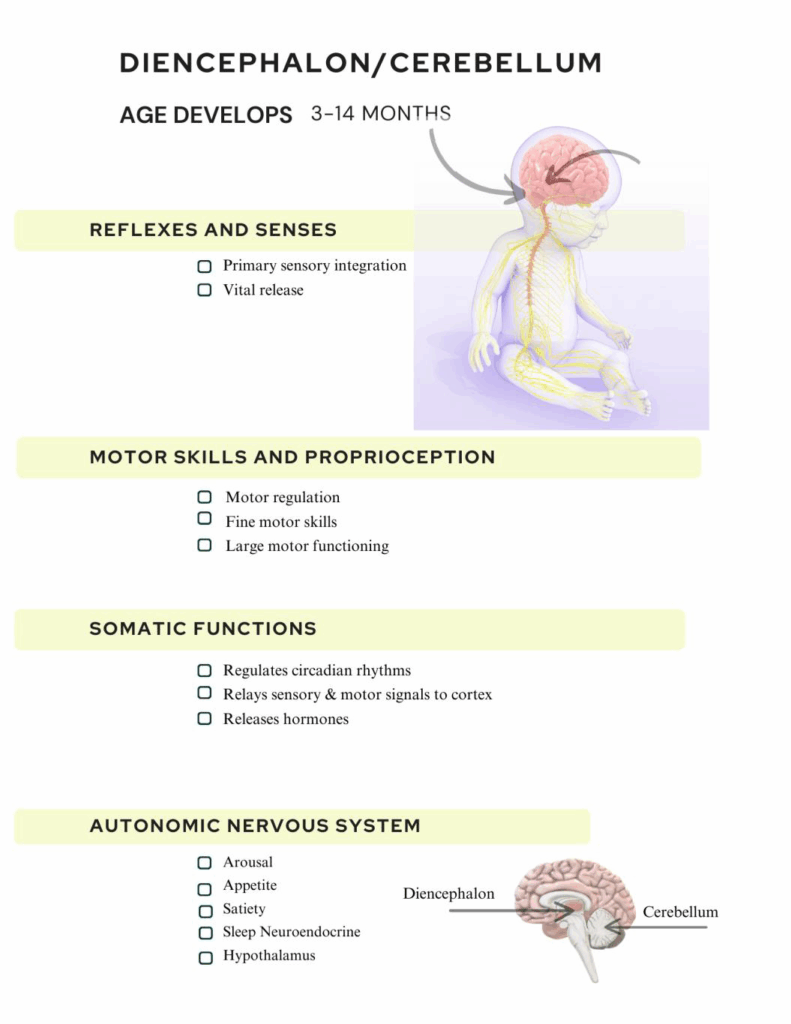
Figure 7. Level 3: Diencephalon illustration
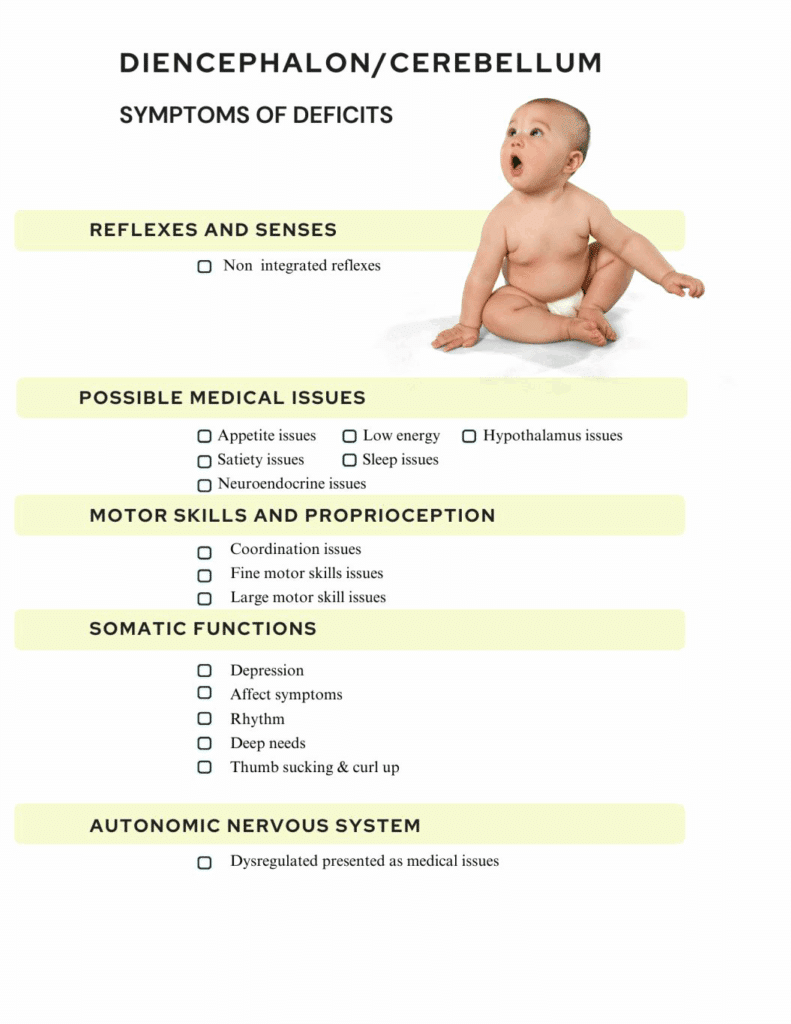
Figure 8. Level 3: Diencephalon illustration
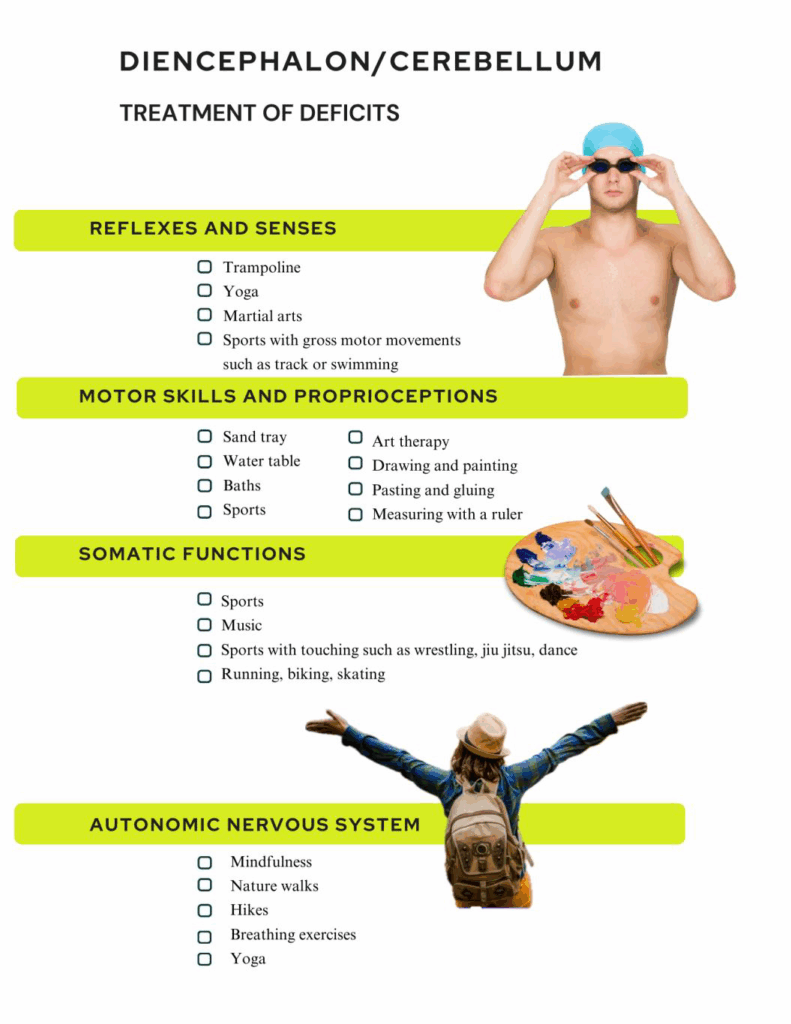
Figure 9. Level 3: Diencephalon illustration
Symptoms and Deficits
Trauma-related dysregulation in the diencephalon manifests as chronic sleep disruption, appetite swings, hormonal imbalance, fine motor delays, sensory overload, chronic pain, migraines, fatigue, and impaired interoception. Mood instability often arises from circadian rhythm disruptions (Perry, 2009; van der Kolk, 2014; Maté, 2022; Siegel, 2012; Dunkin, 2024).
Interventions and Treatments
Interventions include large motor activities such as swimming and martial arts, fine motor strengthening through crafts and instrument playing, mindfulness practices such as yoga and guided imagery, structured routines for sleep and meals, nature therapy, soothing kits with tactile or sensory objects, and journaling to track rhythms of hunger, sleep, and emotions (Perry, 2009; Siegel, 2012; Levine, 2010; Maté, 2022; Dunkin, 2024).
Framework Notes
Perry (2009) emphasizes the central role of diencephalic rhythms in regulation. Maté (2022) highlights how trauma dysregulates endocrine and immune systems. Siegel (2012) identifies mindful interoception as key to integration. Levine (2010) stresses somatic tools for balance, while Dunkin (2024) integrates developmental interventions.
Level 4: Limbic System (Emotion and Attachment)
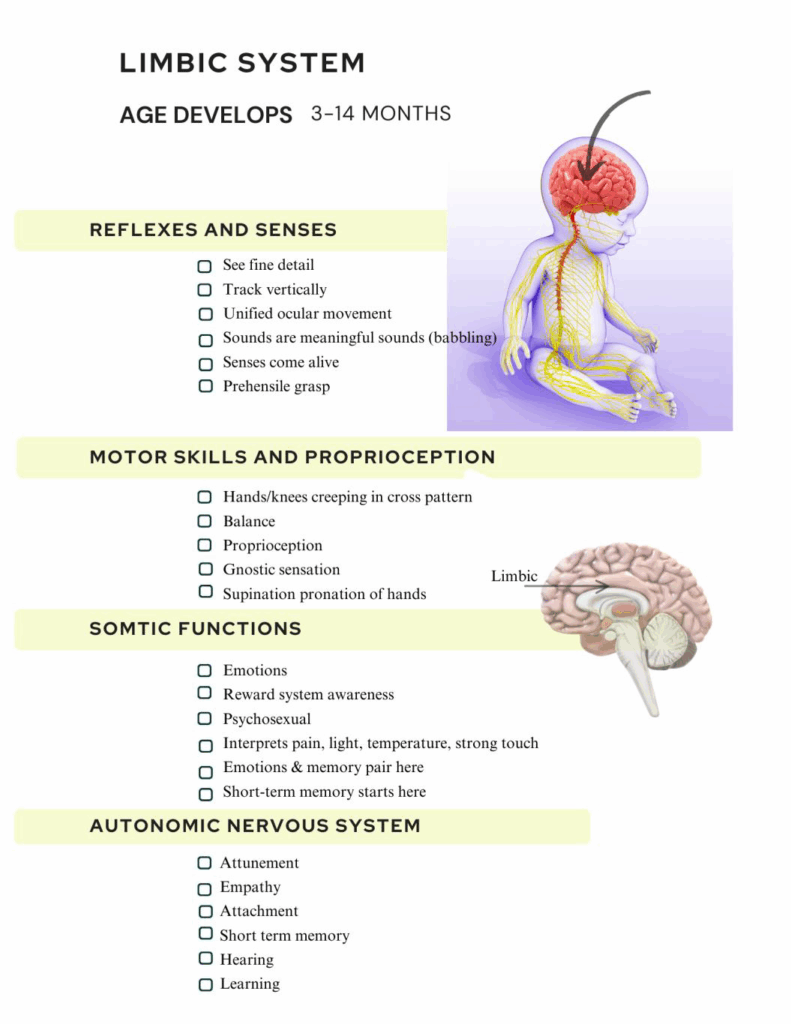
Figure 10. Level 4: Limbic illustration
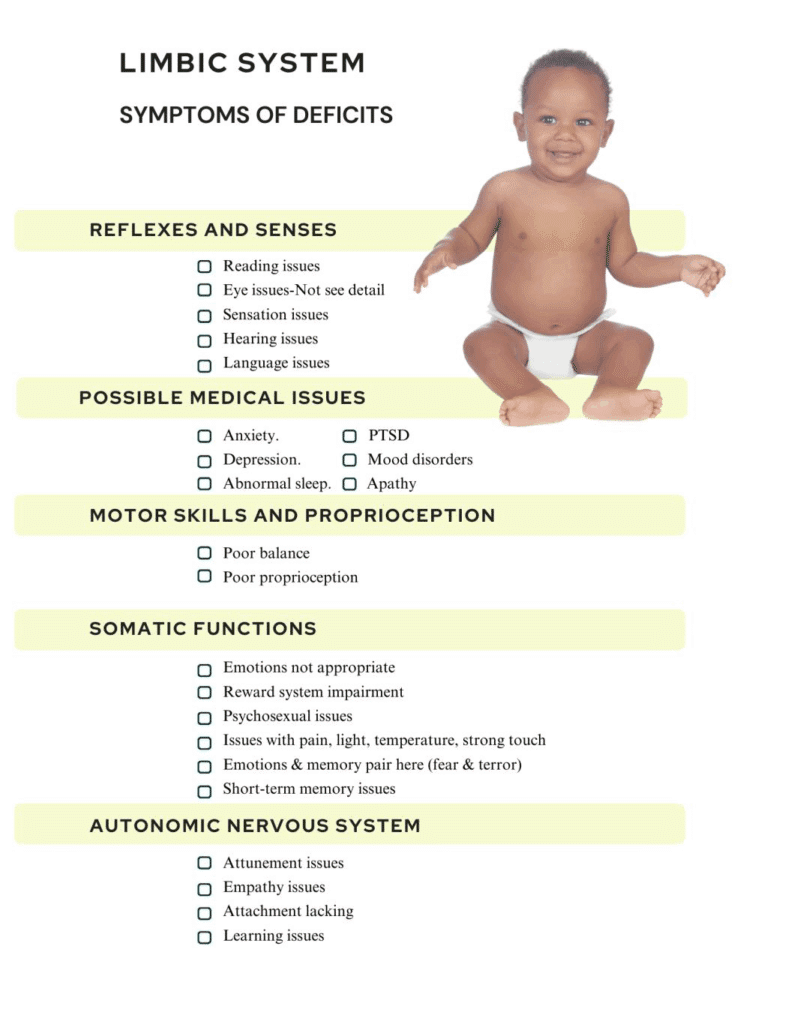
Figure 11. Level 4: Limbic illustration
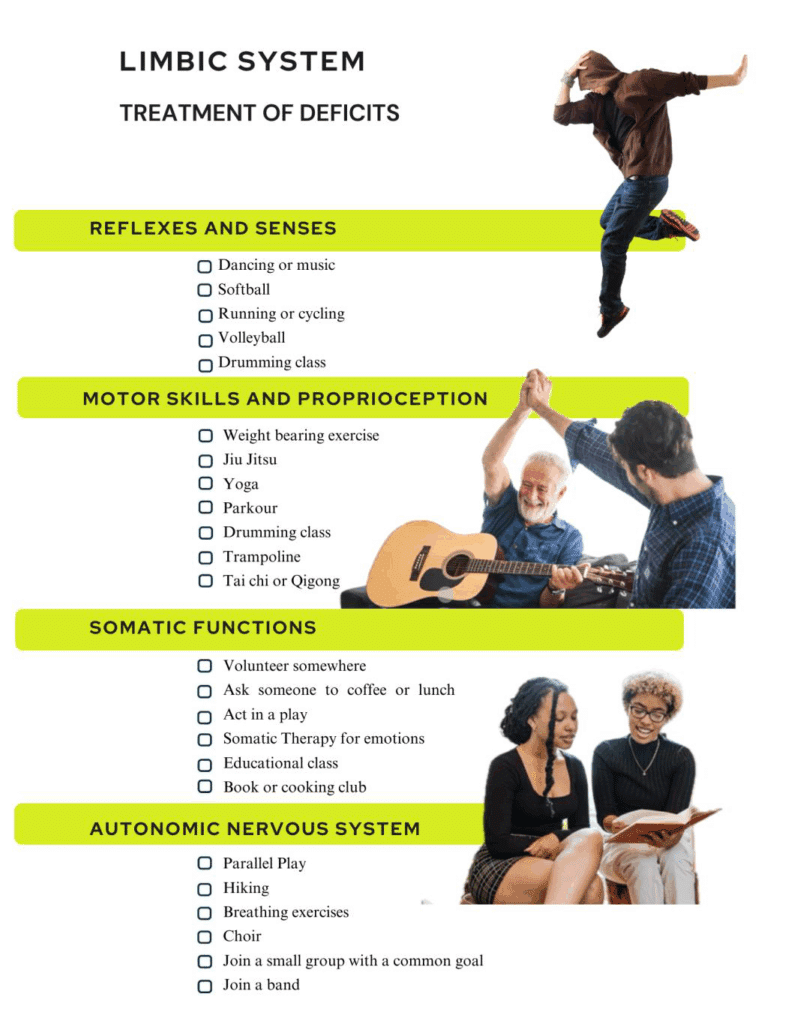
Figure 12. Level 4: Limbic illustration
Symptoms and Deficits
Deficits in the limbic system include insecure or disorganized attachment, hypervigilance, emotional dysregulation (rage, fear, numbing), dissociation, PTSD symptoms such as flashbacks and intrusive memories, social impairments, destructive coping behaviors, and disrupted reward systems (Perry, 2009; van der Kolk, 2014; Siegel, 2012; Maté, 2022; Levine, 2010; Dunkin, 2024).
Interventions and Treatments
Treatments focus on corrective attachment through therapist attunement and consistency, emotion labeling and mirroring, group therapy and support, expressive arts, trauma-specific modalities such as EMDR and Somatic Experiencing, play-based relational repair, somatic discharge through shaking or crying, and collective social rituals like drumming or cooperative movement. These practices restore affective regulation and relational trust (Perry, 2009; van der Kolk, 2014; Levine, 2010; Dunkin, 2024).
Framework Notes
Perry (2009) emphasizes how trauma disrupts limbic caregiving circuits. Van der Kolk (2014) stresses that relational and body-based practices are indispensable. Levine (2010) shows that completing defensive responses stabilizes affect. Siegel (2012) highlights integration of affect, memory, and relationships, while Dunkin (2024) details expressive therapies and somatic therapies.
Level 5: Cortex (Meaning and Integration)
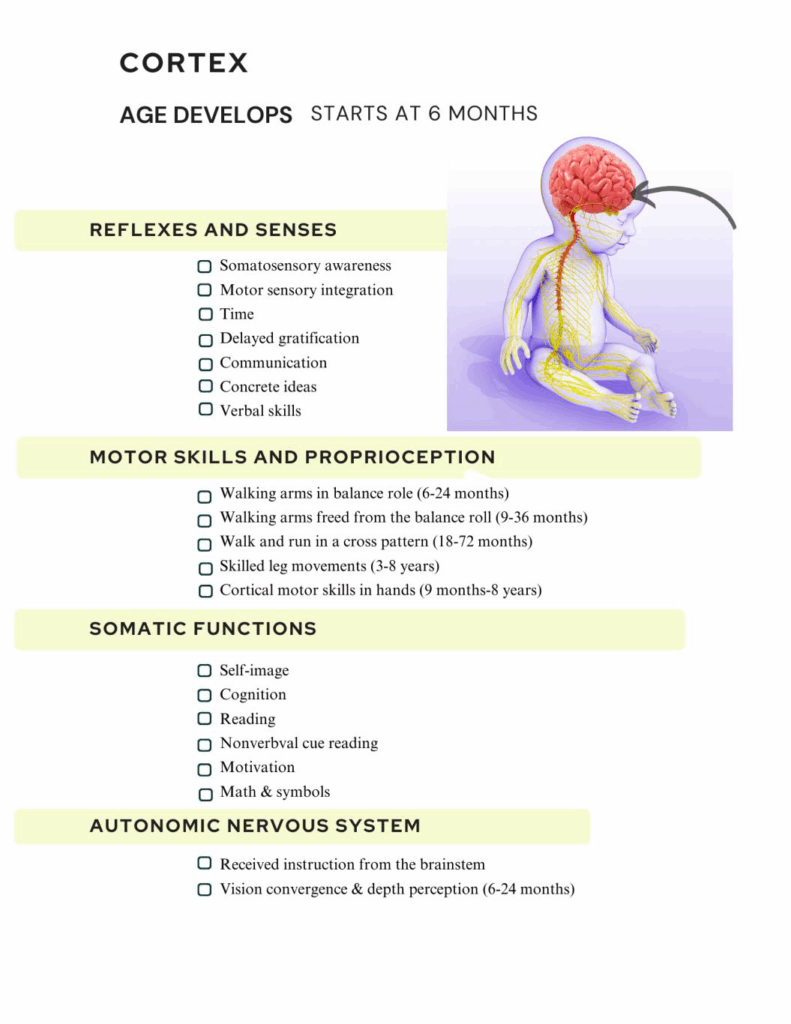
Figure 13. Level 5: Cortex illustration
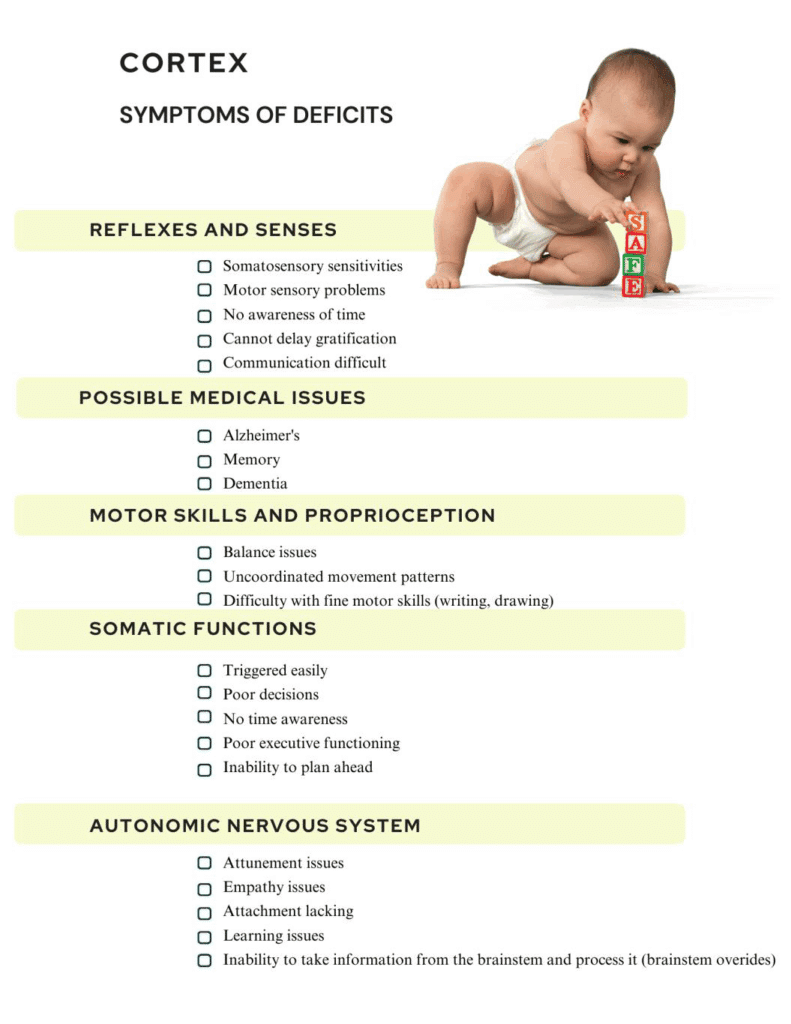
Figure 14. Level 5: Cortex illustration
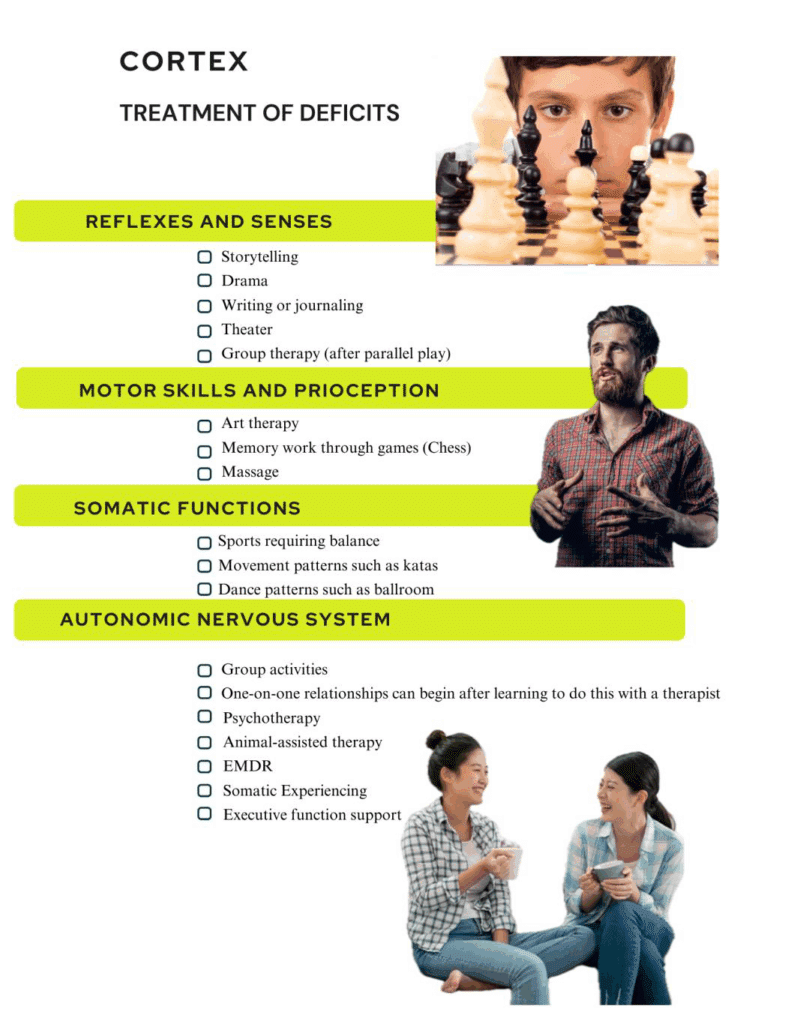
Figure 15. Level 5: Cortex illustration
Symptoms and Deficits
Cortical deficits include executive dysfunction, fragmented autobiographical memory, maladaptive core beliefs, rigid thinking, concentration difficulties, and loss of meaning or existential despair (Siegel, 2012; Perry, 2009; van der Kolk, 2014; Maté, 2022; Dunkin, 2024).
Interventions and Treatments
Interventions at this stage include narrative therapy, journaling, symbolic rituals, cognitive restructuring, psychodrama and role play, executive functioning skill building, psychoeducation, and mindfulness or meditation. These interventions help reconstruct coherent life narratives and create meaning (Siegel, 2012; van der Kolk, 2014; Perry, 2009; Levine, 2010).
Framework Notes
Perry (2009) emphasizes that higher interventions succeed only after lower brain systems are regulated. Van der Kolk (2014) highlights narrative and symbolic processes as consolidating recovery. Siegel (2012) underscores narrative coherence as the hallmark of healing. Maté (2022) stresses the role of authenticity and meaning, and Levine (2010) notes symbolic completion strengthens integration.
Why Top-Down Alone Is Not Enough
Attempting trauma processing without addressing foundational dysregulation risks retraumatization. Porges (2011) explains that when the autonomic nervous system remains in survival mode, higher cognition cannot fully engage. Perry (2009) emphasizes that treatment must follow the order of brain development. Maté (2022) underscores that trauma resides in the body, not just in memory, making bottom-up methods indispensable. Van der Kolk (2014) notes that survivors may appear cognitively aware of trauma yet remain physiologically hijacked, highlighting why integrated protocols are critical.
Conclusion
Developmental trauma injures the brain and body in the sequence they develop; healing must follow the same order. The ACE study revealed the lifelong impact of early adversity (Felitti et al., 1998). Perry’s (2009) neurodevelopmental lens, Porges’ (2011) autonomic theory, Siegel’s (2012) integration model, van der Kolk’s (2014) somatic emphasis, Maté’s (2022) holistic framing, and Levine’s (2010) somatic renegotiation converge on the principle that bottom-up, sequential treatment is essential.
Dunkin (2024) contributes an applied protocol (NT^2) that operationalizes these insights, mapping interventions to neurodevelopmental deficits in adults with developmental trauma. This integration provides clinicians with a roadmap: begin with safety and regulation at the brainstem, progress through sensorimotor and emotional systems, and only then move to cognitive and narrative therapies. Healing developmental trauma is not only possible but profound when treatment respects the body’s developmental order.
Level 1: Medulla
| Symptoms | Treatments |
| Autonomic dysregulation (irregular HR/BP) | Rhythmic activities (rocking, drumming, walking) |
| Breathing disturbances (apnea, shallow respiration) | Vestibular stimulation (dance, balance boards) |
| Sleep disruption (insomnia, night terrors) | Somatosensory input (massage, weighted blankets) |
| GI dysregulation (IBS-like symptoms) | Breathing regulation (diaphragmatic breathing, humming) |
| Vestibular/balance problems | Temperature therapy (warm baths, contrast) |
| Exaggerated or blunted startle reflex | Nature exposure (grounding, outdoor activity) |
| Sensory processing issues (hypersensitivity/numbness) | Short rhythmic entrainment breaks |
| Functional neurological symptoms | Group rhythm-based practices |
| Chronic fatigue or unstable energy |
Level 2: Pons
| Symptoms | Treatments |
| Sleep dysregulation (REM/NREM issues) | Structured routines |
| Exaggerated startle response | Heavy work/proprioceptive input |
| Postural rigidity/primitive reflex retention | Primitive reflex integration (crawling, rolling) |
| Motor coordination difficulties | Balance/vestibular training (yoga, trampoline) |
| Visual tracking problems | Music-movement pairings |
| Auditory hypersensitivity or delays | Sensory regulation (warm/cool contrast, tactile play) |
| Proprioceptive challenges | Martial arts or tai chi |
| Fine motor delays | Deep pressure therapies (weighted blankets) |
| Restlessness and fidgeting | Mindful movement (yoga, somatic awareness) |
Level 3: Diencephalon
| Symptoms | Treatments |
| Chronic sleep disruption | Large motor integration (swimming, martial arts) |
| Appetite dysregulation | Fine motor strengthening (crafts, instruments) |
| Endocrine imbalance | Mindfulness (body scans, guided imagery) |
| Fine motor delays | Nature therapy (gardening, sunlight) |
| Sensory overload | Routines (structured meals, sleep) |
| Medically unexplained symptoms (pain, fatigue) | Soothing kits (tactile, scents, weighted tools) |
| Poor interoception (hunger, thirst, fatigue) | Journaling/tracking body states |
| Mood instability linked to rhythms |
Level 4: Limbic System
| Symptoms | Treatments |
| Attachment disturbances | Corrective attachment in therapy |
| Hypervigilance and anxiety | Emotion labeling and mirroring |
| Emotional dysregulation | Group therapy/support groups |
| Dissociation (depersonalization/derealization) | Expressive therapies (art, music, drama) |
| PTSD symptoms (flashbacks, nightmares) | Trauma therapies (EMDR, Somatic Experiencing) |
| Social impairments (trust issues, fear of intimacy) | Play-based relational repair |
| Self-destructive coping (substance abuse, cutting) | Somatic discharge (shaking, crying, vocalizing) |
| Reward system disruption (gambling, compulsions) | Safe social rituals (drumming, movement) |
Level 5: Cortex
| Symptoms | Treatments |
| Executive dysfunction | Narrative therapy (life story reconstruction) |
| Fragmented autobiographical memory | Journaling and reflective writing |
| Negative core beliefs | Symbolic rituals (letters, symbolic release) |
| Rigid thinking/intellectualization | Cognitive restructuring (reframing beliefs) |
| Attention/concentration difficulties | Psychodrama/role-play |
| Loss of meaning and existential despair | Executive skills training |
| Psychoeducation on trauma neuroscience | |
| Mindfulness/meditation |
References
Dunkin, K. (2024). A neurophysiological protocol for neurosequential deficits due to developmental trauma (Doctoral project, California Southern University).
Felitti, V. J., Anda, R. F., Nordenberg, D., Williamson, D. F., Spitz, A. M., Edwards, V., Koss, M. P., & Marks, J. S. (1998). Relationship of childhood abuse and household dysfunction to many of the leading causes of death in adults: The Adverse Childhood Experiences (ACE) Study. American Journal of Preventive Medicine, 14(4), 245–258.
Levine, P. A. (2010). In an unspoken voice: How the body releases trauma and restores goodness. North Atlantic Books.
Maté, G. (2022). The myth of normal: Trauma, illness, and healing in a toxic culture. Avery.
Perry, B. D. (2009). Examining child maltreatment through a neurodevelopmental lens: Clinical applications of the Neurosequential Model of Therapeutics. Journal of Loss and Trauma, 14(4), 240–255.
Porges, S. W. (2011). The polyvagal theory: Neurophysiological foundations of emotions, attachment, communication, and self-regulation. W. W. Norton & Company.
Siegel, D. J. (2012). The developing mind: How relationships and the brain interact to shape who we are (2nd ed.). Guilford Press.
van der Kolk, B. A. (2014). The body keeps the score: Brain, mind, and body in the healing of trauma. Viking.